Process / Product quality benefits
- Uniform dispersion of ultrafine graphite
- Stable and consistent lubricant formulation
- Elimination of agglomerates and uneven distribution
- Repeatable mixing performance
Content on this site is tailored by region. Pick the one that applies to you.
Fristam Powder Mixer PM 03 Enables Reliable Lubricant Additive Integration
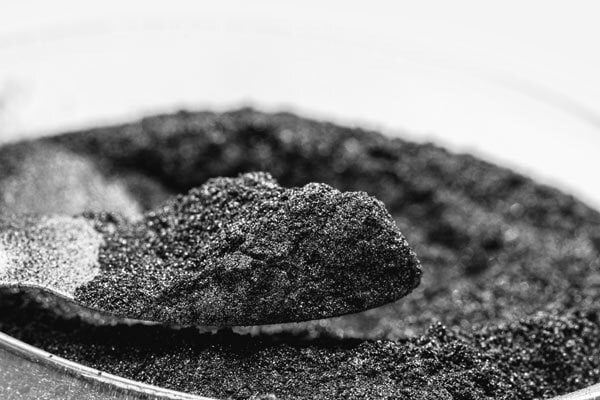
GET IN TOUCHHowever, dispersing ultrafine powders into high-viscosity oils remains a significant process challenge. Graphite is particularly difficult to handle due to its tendency to agglomerate, float or settle if not properly wetted and dispersed.
In many lubricant applications, especially new product development, there is no established mixing methodology, creating risk for production teams and uncertainty for process engineers responsible for scale-up.
This case study outlines how a lubricant manufacturer implemented Fristam Powder Mixer technology to establish a reliable and repeatable dispersion process for a previously unproven application.
The customer required a mixing solution capable of dispersing: 480 kg (1,058 lbs) of ultrafine graphite powder into 1,340 kg (2,955 lbs) of base oil – with a viscosity of 460 cSt, in temperatures up to 55 °C (131 °F).
They required:
This solution combined controlled powder induction with robust mixing performance, enabling efficient processing of abrasive graphite particles.
Trial Set-Up
Trials were conducted at the Fristam facility using the customer’s materials.
1. Liquid Recirculation
Base oil was circulated to establish stable flow conditions.
2. Powder Induction
Graphite powder was introduced via suction, ensuring immediate wetting and controlled feeding.
3. Mixing and Dispersion
The system processed the mixture under controlled conditions, overcoming challenges associated with viscosity and powder behaviour.
4. Validation
Trials confirmed consistent, homogeneous dispersion, enabling confident scale-up.
The success of the project also demonstrated that:
Please don’t hesitate to contact our customer support. We would be happy to answer any questions you may have about our case studies or similar challenges, and we will provide effective solutions tailored to your needs.
Typical applications include:
Dispersing graphite powder in high-viscosity oil requires controlled powder induction combined with sufficient shear. Inline powder mixers, such as the Fristam PM system, draw powder directly into the liquid stream, ensuring immediate wetting and preventing agglomeration, floating or sedimentation.
Graphite is difficult to mix because it is ultrafine, lightweight and prone to agglomeration. It can float on the surface or form clumps if not properly wetted, making consistent dispersion challenging in high-viscosity oils.
Inline powder induction systems combined with high-performance mixing pumps are the most effective solution. They enable controlled powder feeding, rapid wetting and uniform dispersion, even in high-viscosity and abrasive applications.
Yes, but high-viscosity oils (around 460 cSt or ≈400 cP) require specialised mixing equipment. Standard tank mixers often lack sufficient shear and induction capability, whereas inline powder mixers can maintain consistent dispersion.
Key challenges include:
Powder induction introduces solids directly into a fast-moving liquid stream using suction. This ensures immediate wetting, reduces dusting and prevents clumping, significantly improving dispersion quality and process consistency.
Live trials allow manufacturers to validate mixing performance using real materials. This reduces risk, confirms process feasibility and provides confidence before scaling up to production.
Yes, abrasive powders can cause wear in conventional systems. However, properly designed industrial powder mixers with robust components can handle abrasive materials without significant performance loss or maintenance issues.
Inline mixing offers:
Consistency is achieved through controlled powder induction, appropriate shear levels and stable process conditions. Using proven mixing technology and validated parameters ensures repeatable results across batches.
Yes. Once validated through trials, inline powder mixing systems can be scaled reliably for production. Proven performance supports multi-site implementation and consistent product quality.
Powder induction systems are widely used in:
They are particularly valuable where powders must be dispersed into liquids efficiently and consistently.